3D Printing Lab
A dedicated space for designing, slicing, and fabricating physical objects. I got into 3D printing after seeing its capabilities and the inspiring projects people shared online. Since then, I’ve been designing and printing items that are genuinely useful for basic needs around the house.
Another reason I took up 3D printing was to create replicas of WWII weapons for display purposes only. These replicas are unfireable by design, serving purely as historical representations.
Hardware & Post-Processing
A successful 3D printing project doesn't end when the print finishes. It requires a combination of a well-calibrated FDM machine for the raw fabrication, and a set of post-processing tools to assemble, fuse, and finish the final models—especially for large-scale multi-part builds like the WWII replicas.
Printer Setup
- ■ Extruder: Direct Drive for better retraction control.
- ■ Hotend: All-metal hotend to support high-temp materials.
- ■ Build Plate: PEI spring steel sheet for superior bed adhesion and easy removal.
- ■ Cooling: Upgraded part cooling fans to handle extreme overhangs without supports.
Assembly & Post-Processing
- ■ Adhesives: Hot glue guns and cyanoacrylate (super glue) for rapidly fusing large structural parts.
- ■ Surface Prep: Sandpaper (varying grits) and filler primer to smooth out layer lines before painting.
- ■ Hardware: Soldering irons for brass heat-set inserts, providing strong metal threads in plastic parts.
- ■ Finishing: Acrylic paints, airbrushing, and clear coats for achieving realistic, metallic, or matte finishes on display pieces.
Filament Profiling
Different projects require different material properties. Tuning the slicer profiles (flow rate, retraction distance, and cooling) for each filament type is critical to prevent stringing, warping, and layer delamination.
PLA
The standard for aesthetic models and quick prototypes. Very easy to print with minimal warping, but lacks the temperature resistance needed for mechanical parts stored in hot environments (like a car).
PETG
The middle ground. Stronger and more heat-resistant than PLA, while being easier to print than ABS. Perfect for functional brackets, mounts, and structural components used in my home network rack.
TPU
Flexible and rubber-like. Printing TPU requires a well-calibrated direct drive extruder and very slow print speeds to prevent the filament from buckling in the gears. Excellent for custom gaskets and shock absorbers.
CAD & Prototyping
From Screen to Bed
I use CAD software to design my own custom parts when off-the-shelf solutions don't exist. Designing for 3D printing requires "Design for Additive Manufacturing" (DfAM) principles. This means paying close attention to overhang angles, avoiding the need for support material where possible, and factoring in the slight shrinkage of plastics as they cool.
Print Gallery
A collection of functional mechanical parts and aesthetic models fabricated in the lab.
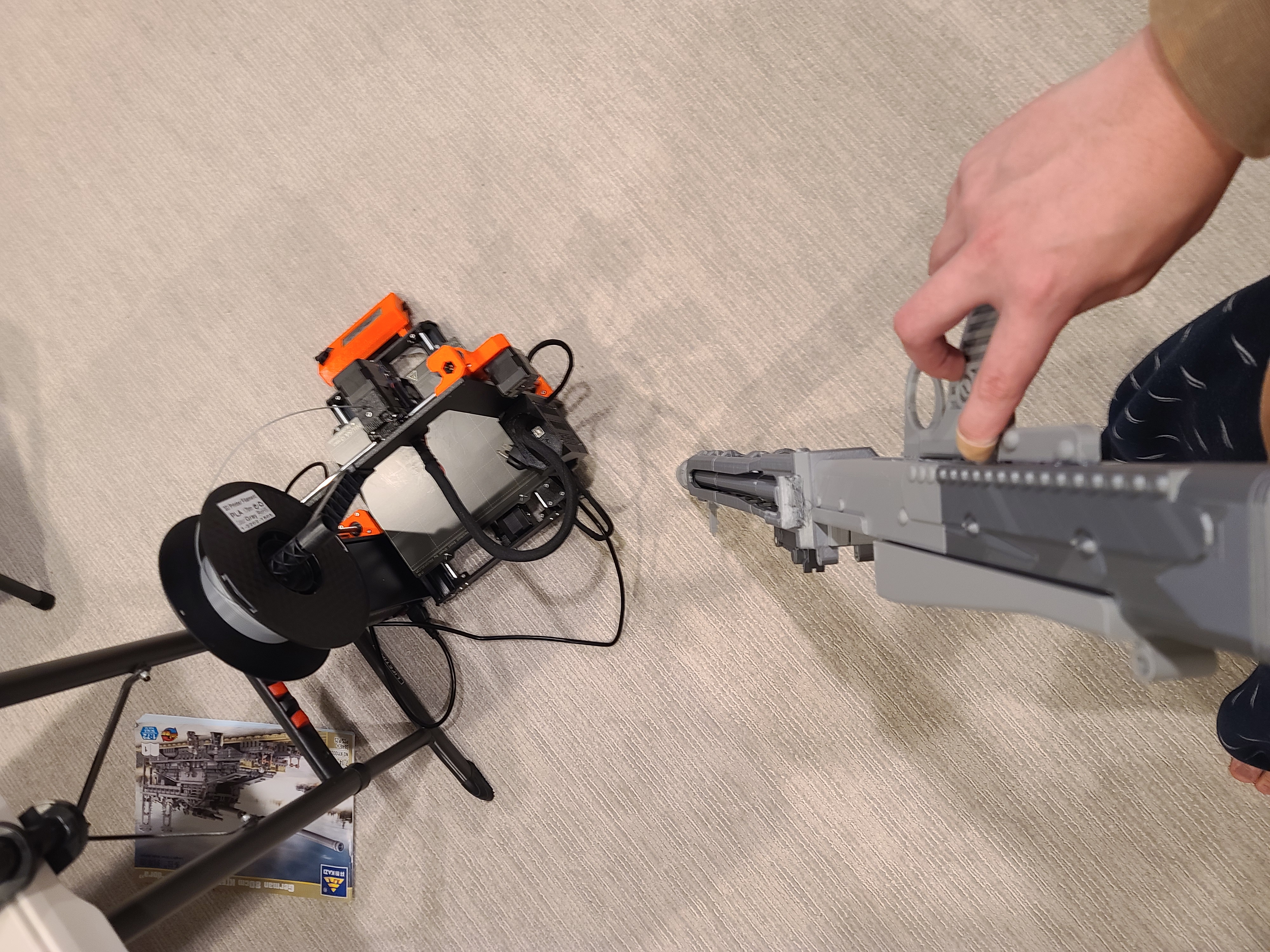
German MG34 Main Assembly (Unfireable Display Replica)
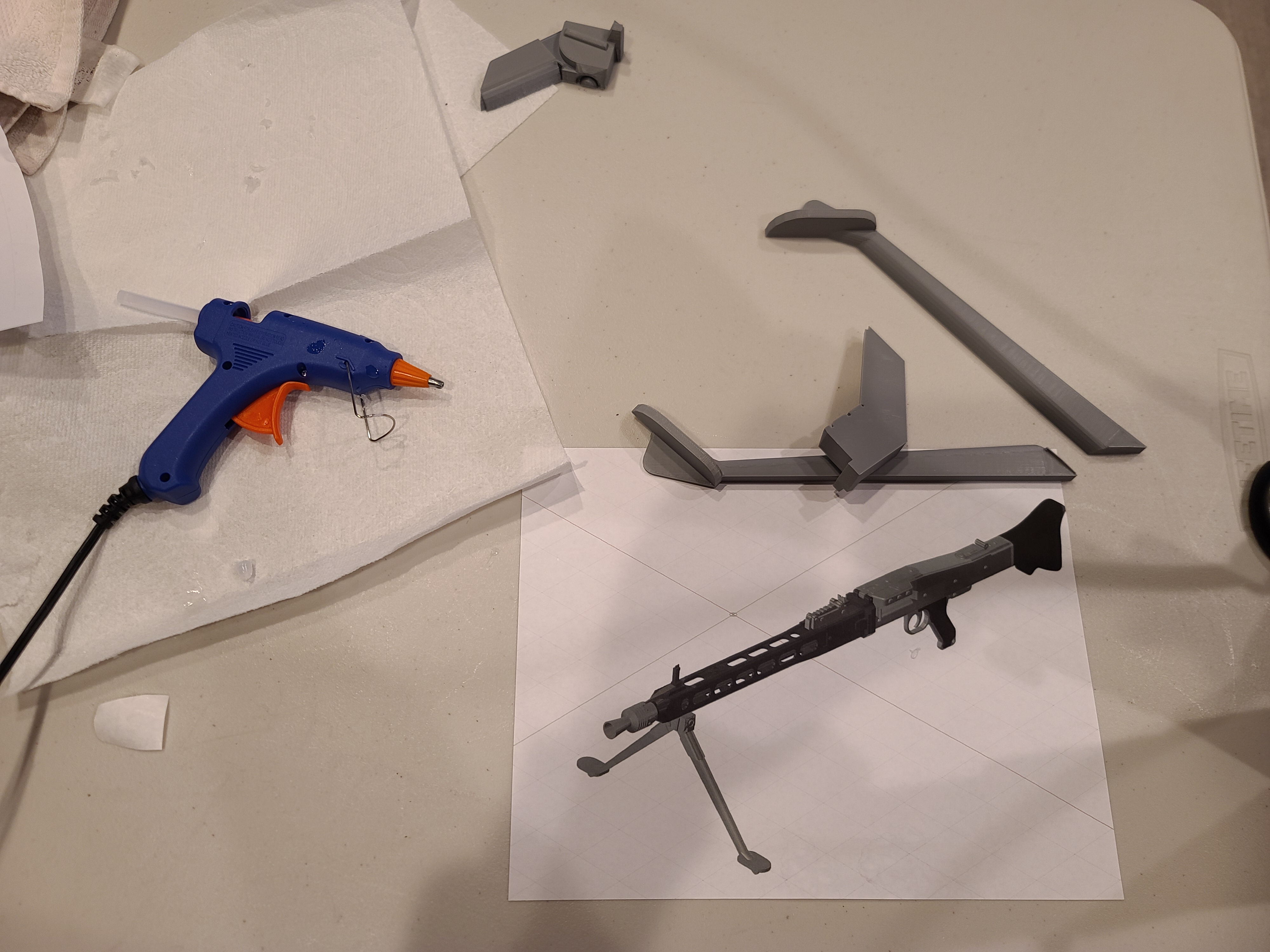
MG34 Detail View 1
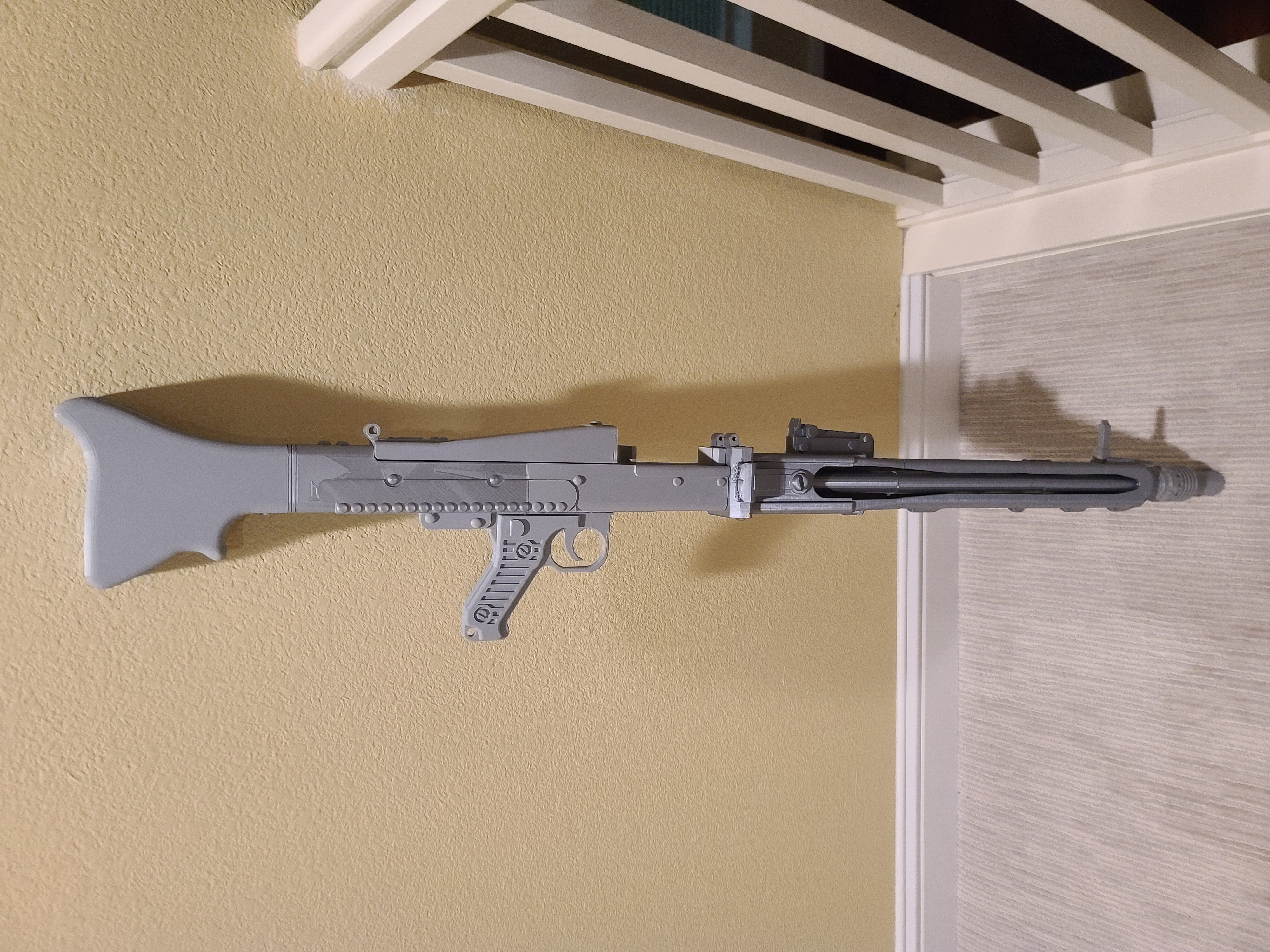
MG34 Detail View 2
Summary
3D printing is as much an exercise in patience and troubleshooting as it is a manufacturing process. It fundamentally changes how you view problems around the house or lab—rather than buying a specialized piece of plastic, you can simply measure, model, and manifest it into reality within a few hours.